

The Challenge
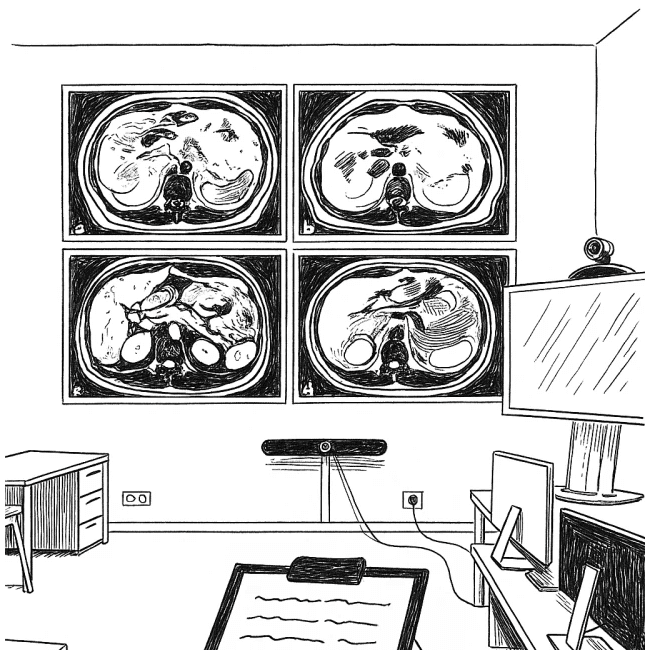
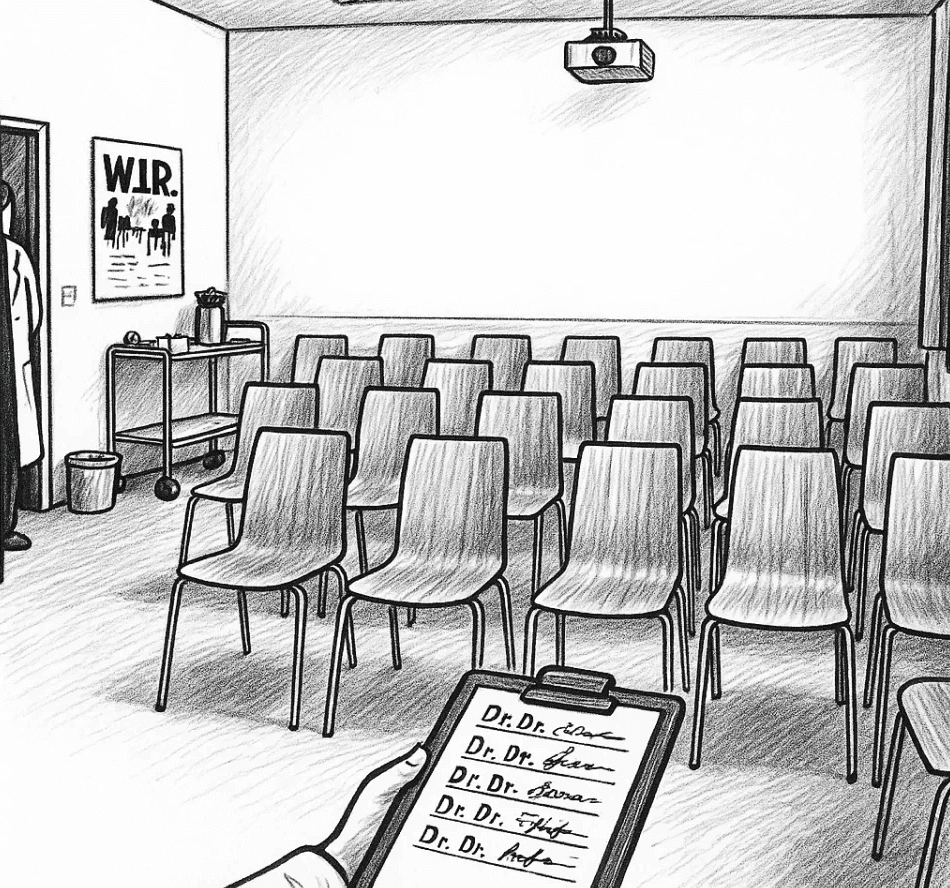
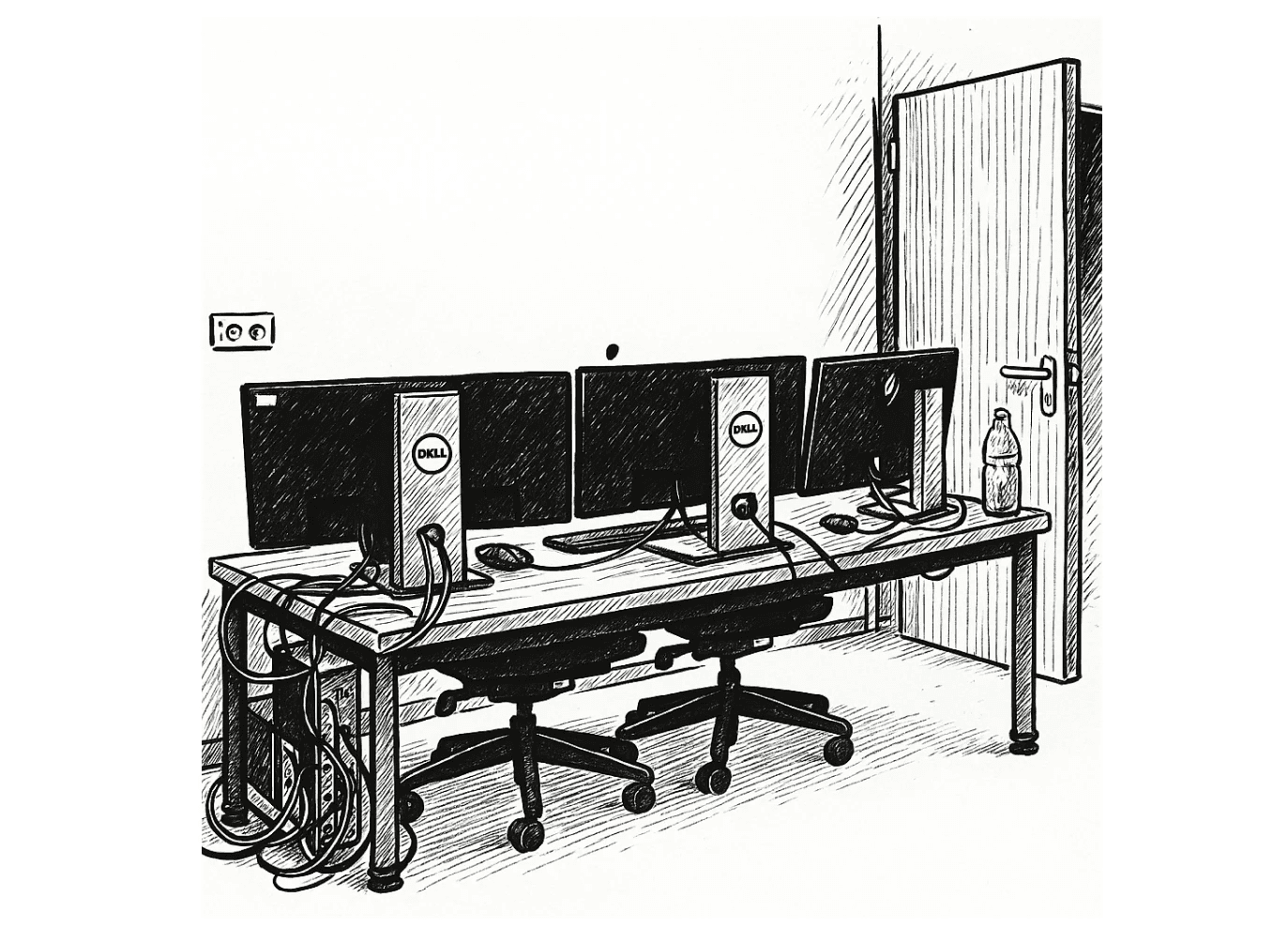
Tumor boards are often overloaded, giving physicians only minutes per case and crucial patient data is scattered across multiple systems. Preparation is time consuming, and the lack of structured overviews leads to incomplete or inaccurate presentations. Communication is unclear, documentation inconsistent, and patients rarely receive transparent feedback.
Designing a seamless experience
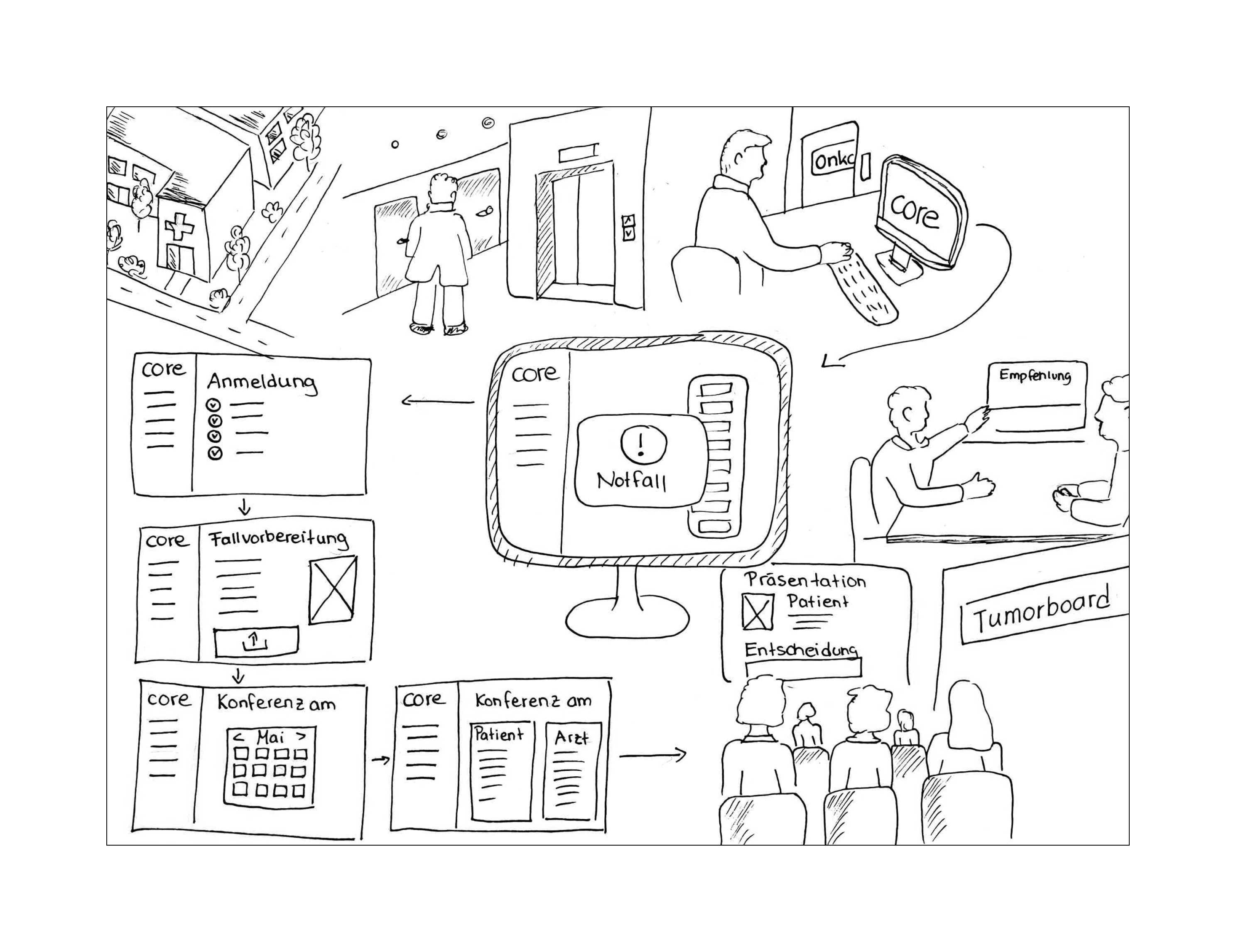
We conducted interviews and shadowing to identify pain points in the tumor board process, then designed a new experience for participants that improves collaboration, structures workflows, and ultimately has a meaningful impact on patient care.
Designing a structured decision making platform
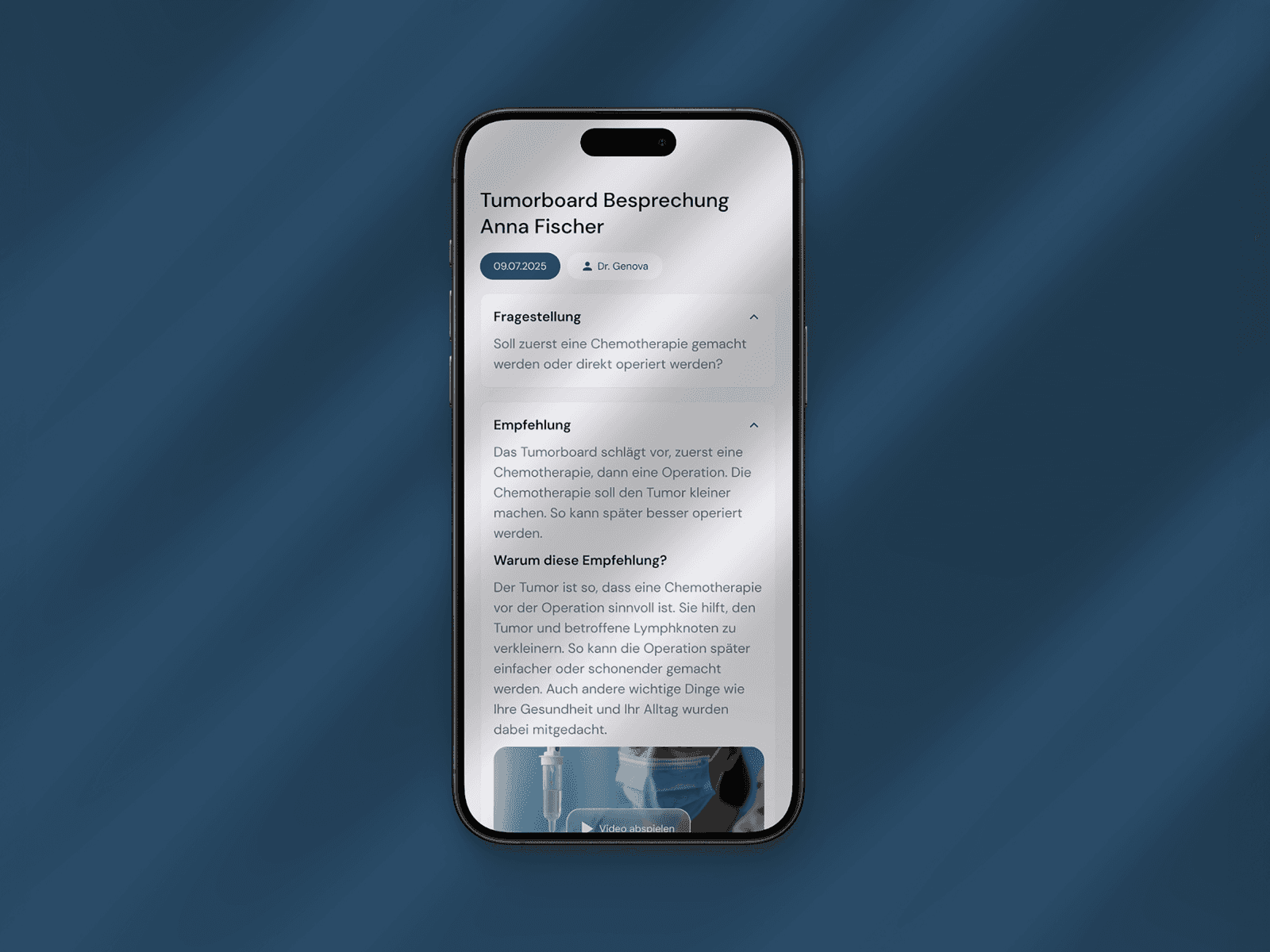
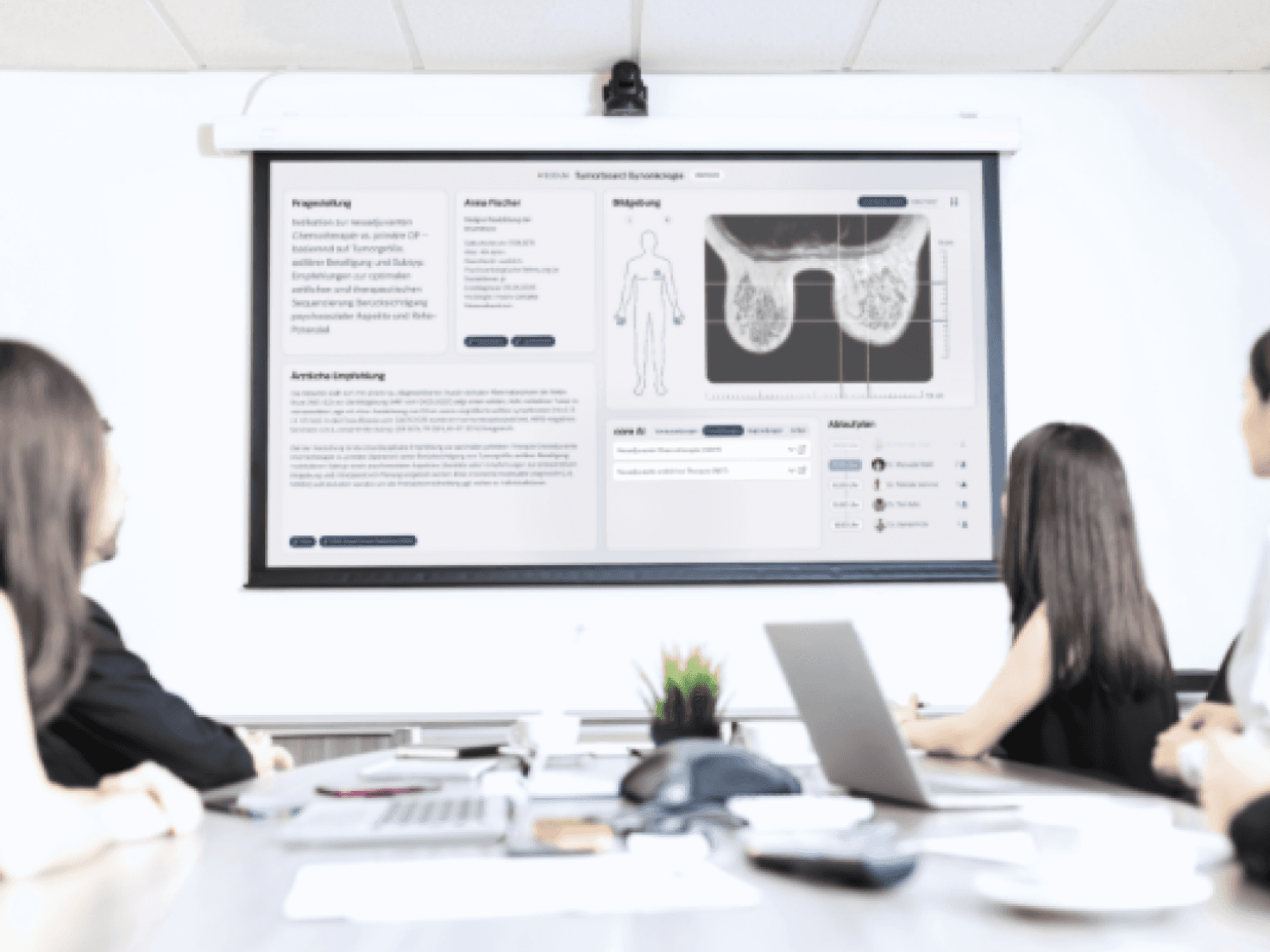
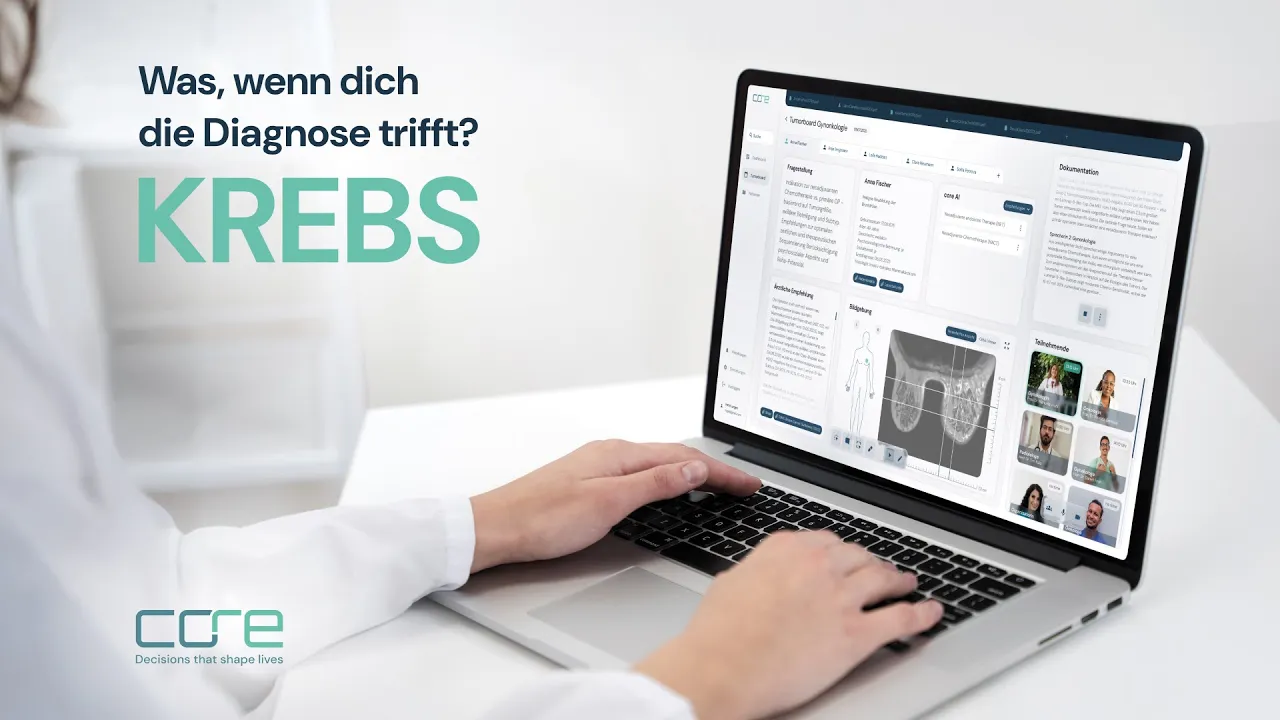
core provides a seamless digital experience for all participants. It supports case submission, preparation, and discussion with intelligent features such as automated completeness checks, integrated scheduling, and interactive visualization modules. During the board meeting, core acts as a central discussion tool, offering structured views, decision paths, and AI-assisted insights, without replacing medical expertise.
Transforming tumor boards into learning systems
By automatically documenting decisions and generating structured summaries, core creates transparency and builds a foundation for continuous learning in oncology. The platform enables hospitals to standardize processes while supporting personalized therapy - turning tumor boards into evolving knowledge systems that improve patient outcomes and quality of life.
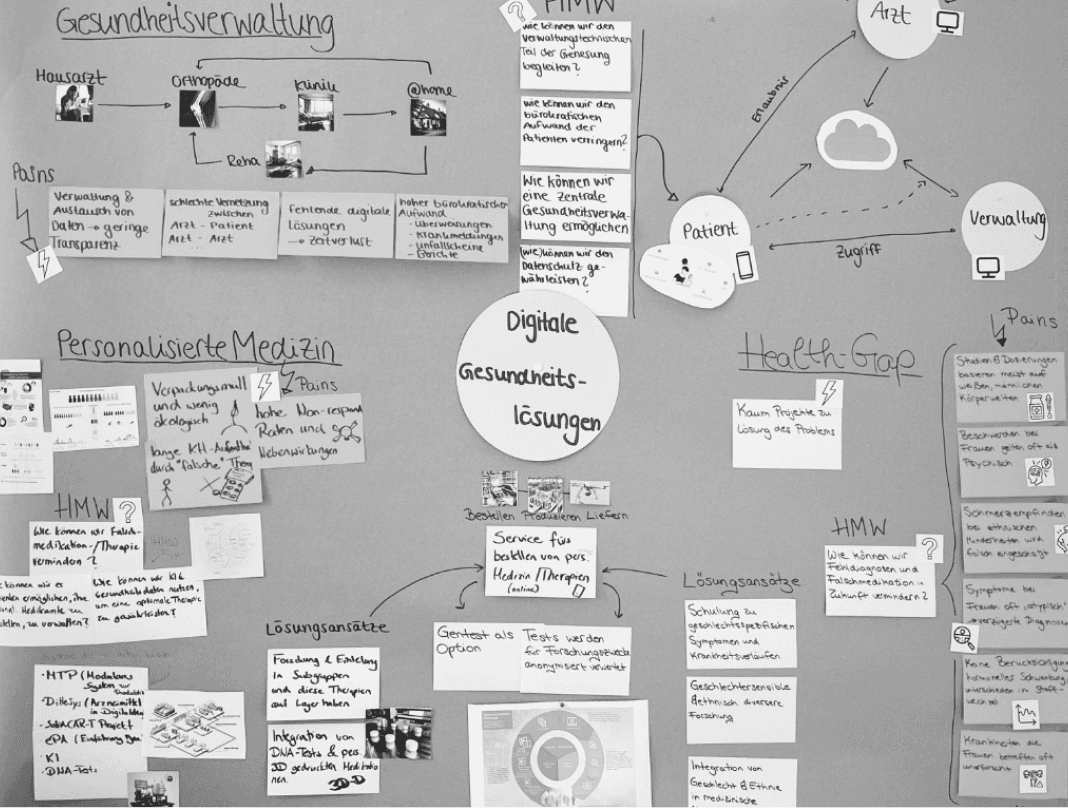
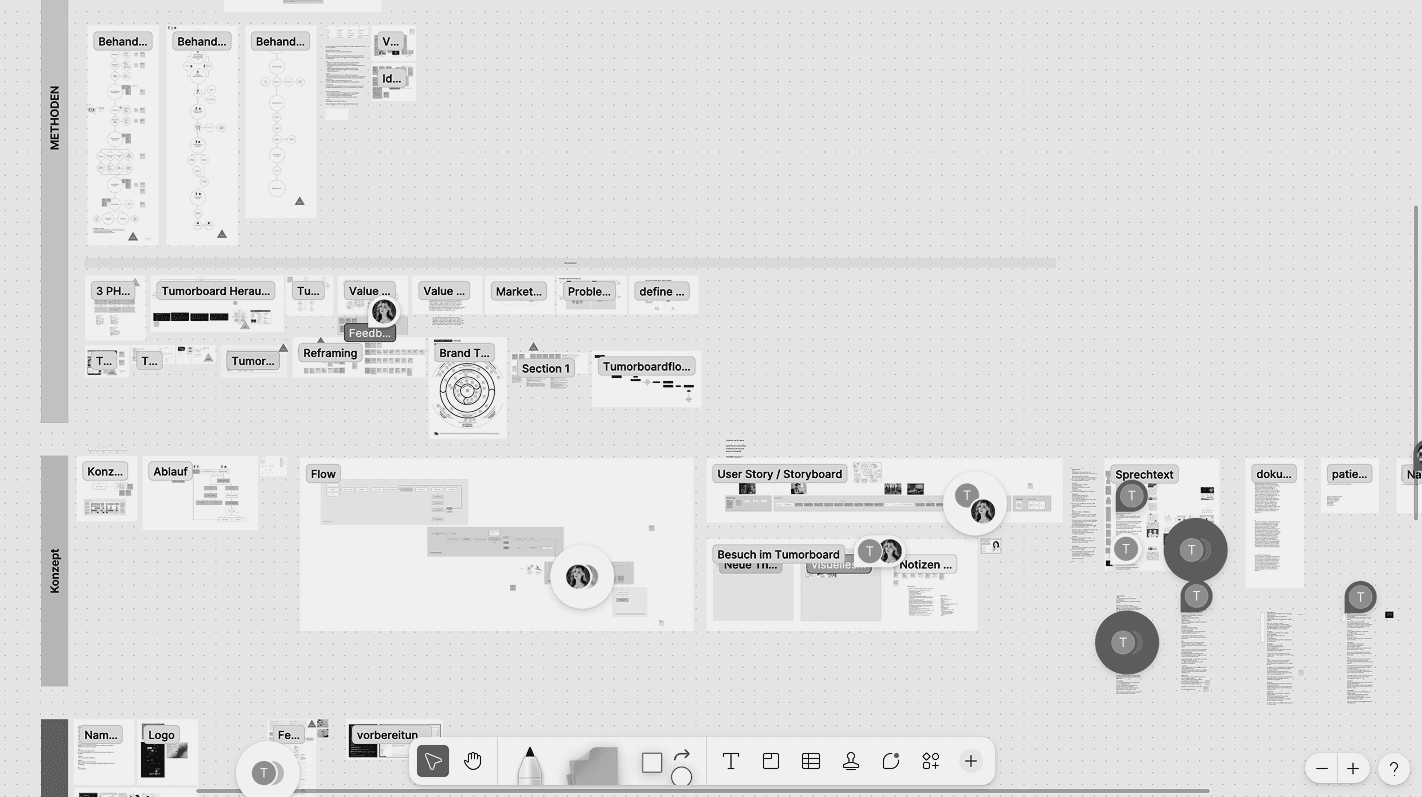
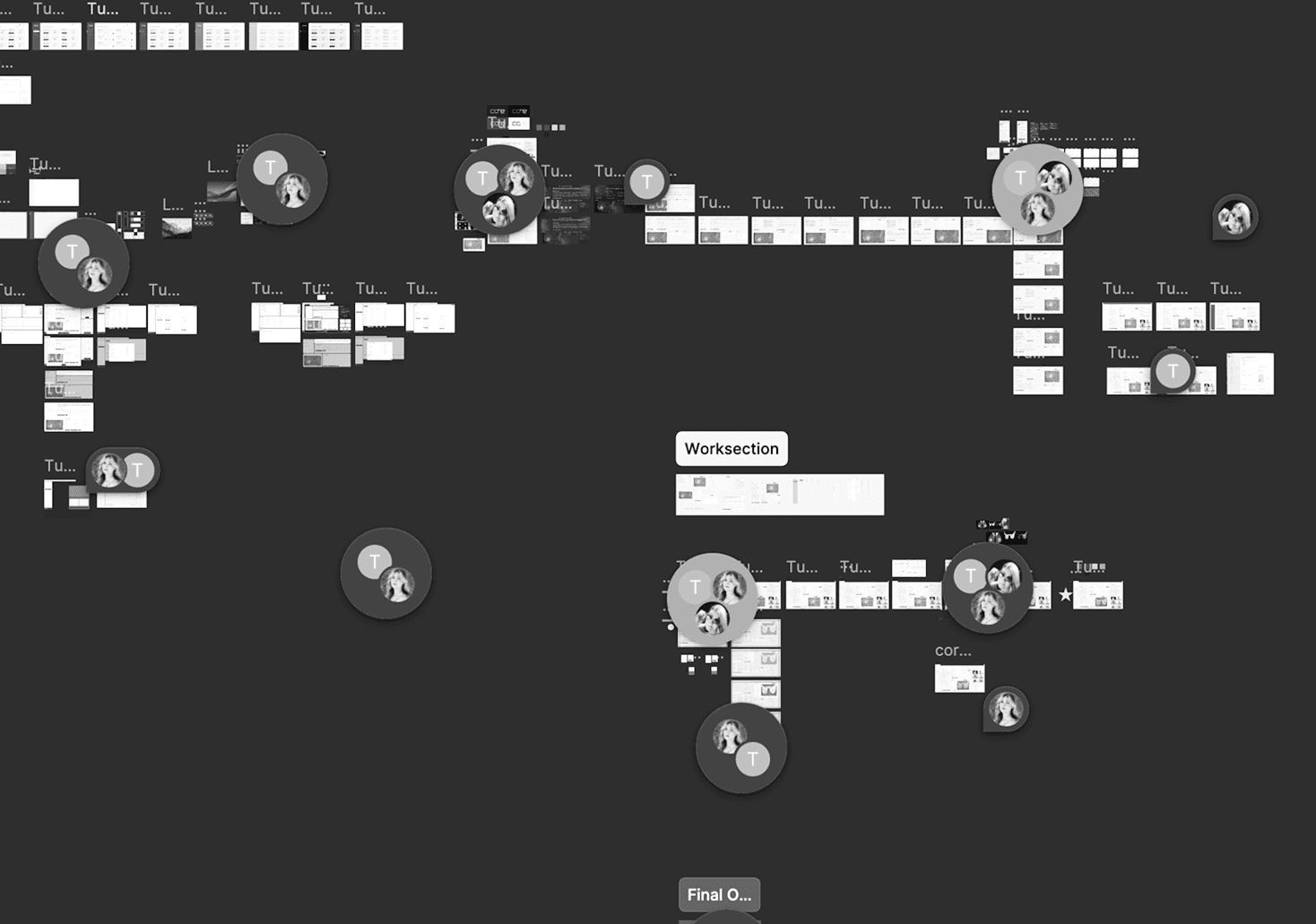
We started analog with Post-its and large posters to immerse ourselves in the topic and map initial insights. As the project evolved, we moved to FigJam to expand our research and apply design thinking methods. For the wireframe development of core, we used Figma, from low to high fidelity. Throughout the process, we worked collaboratively in an interdisciplinary team.
